
Hatha is a slower-paced style built around holding postures, coordinating breath, and finding balance. It's less about flowing quickly from pose to pose and more about settling into each shape long enough to actually feel it.
This guide covers where Hatha comes from, what a class looks like, the poses you'll encounter, the benefits backed by research, and how to tell if it's the right starting point for you.
Key Takeaways
- Hatha Yoga holds poses longer and moves at a gentler, more deliberate pace than flow-based styles
- Beginners often start here—the slower pace leaves room to learn alignment safely
- "Hatha" means "force" or "effort," though many teachers also use sun (ha) and moon (tha) symbolism
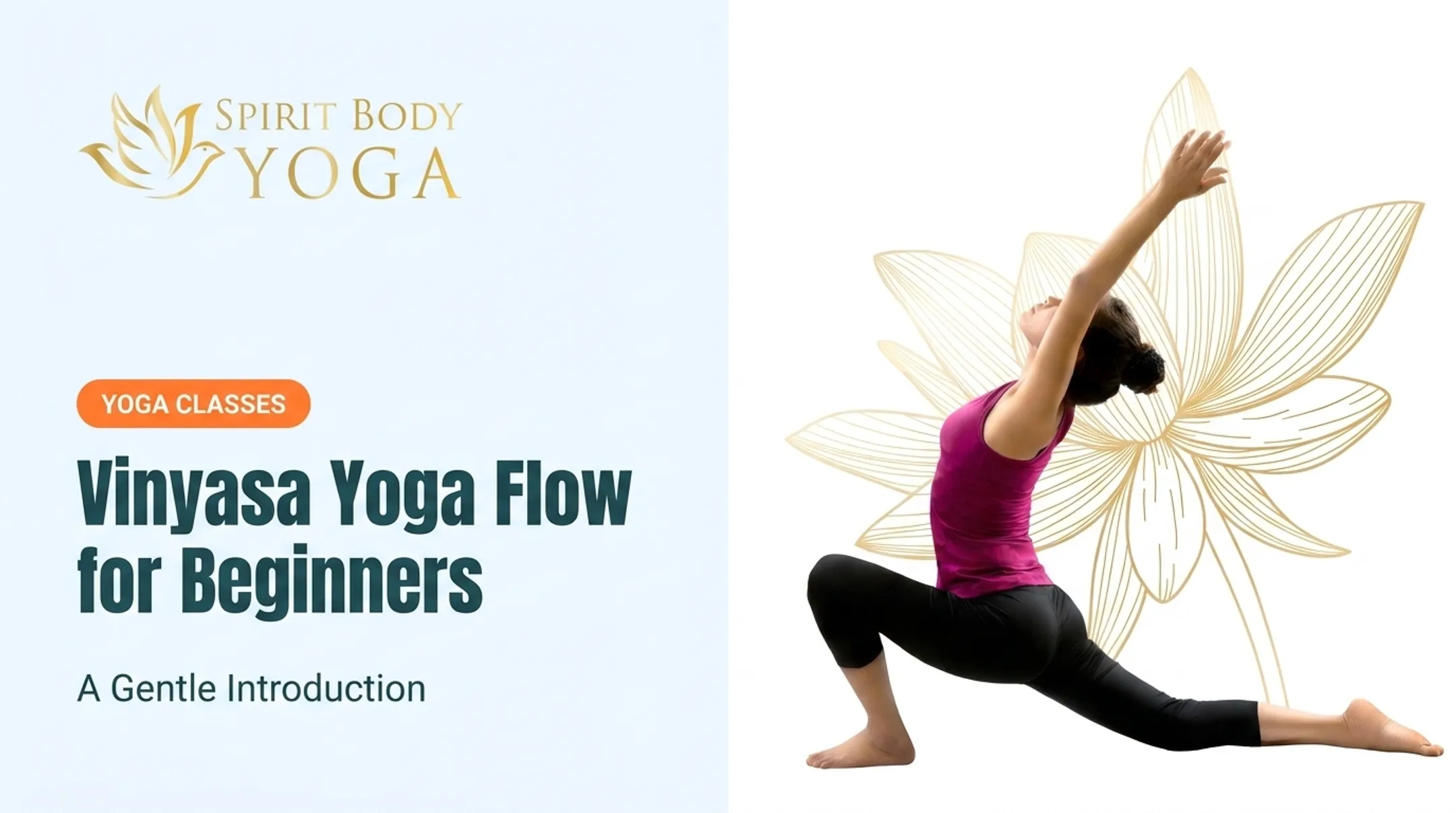
- Unlike Vinyasa’s continuous breath-linked flow, Hatha stays mostly static and less cardio-intensive
- Regular practice supports better flexibility, lower stress, and stronger mind-body awareness
What Is Hatha Yoga? Definition, History, and Meaning
The word "Hatha" is often translated as "force" or "willful effort," referring to the discipline the practice requires.
Yoga Journal also shares a popular symbolic reading: ha meaning sun and tha meaning moon, a balance of opposing energies. Both readings work; the sun-moon version is a teaching metaphor more than a strict linguistic translation.
How do you pronounce Hatha? It's HAH-tuh, with emphasis on the first syllable, not "hath-uh" like the English word "hath."
Historically, Hatha isn't a modern invention. The Hatha Yoga Pradipika, a foundational Sanskrit text on the practice, dates back to the 15th or 16th century. That's centuries of refinement behind the poses you see in class today.
Here's where it gets confusing: in scholarly and traditional contexts, "Hatha" is an umbrella term for nearly all physical, posture-based yoga, including Vinyasa and Ashtanga. On a modern American studio schedule, though, "Hatha" almost always means something gentler and slower. Both uses are correct; they just answer different questions.
Elements of a Traditional Hatha Practice
A traditional practice weaves together four components:
- Asana — physical postures
- Pranayama — breath control and regulation
- Mudra — symbolic hand gestures
- Meditation — quieting and focusing the mind
Spirit Body Yoga’s Gentle Hatha classes put those pieces into practice with movement paired with intention. Owner GloriAnna Kirk, an E-RYT 200 with 18 years of teaching experience, holds one pose at a time and builds in rest instead of rushing students through a sequence.
What Happens in a Typical Hatha Yoga Class
Expect fewer poses than a flow class, and more time in each one—often several breaths per posture while the instructor cues alignment. Transitions stay unhurried, unlike Vinyasa, where you may move on every inhale and exhale. That pace makes Hatha a comfortable entry point if you want control and clarity before faster styles.

Is Hatha Yoga Different from Regular Yoga?
Technically, no. "Hatha" is an umbrella term covering most posture-based yoga, including styles you'd never call gentle. Ashtanga and Power Yoga both fall under this historical definition.
Practically, yes. When a studio markets a class as "Hatha," they almost always mean:
- Slower pacing with longer holds
- More instructional time on alignment
- Lower intensity than Vinyasa, Power, or Ashtanga
This gap between the technical and marketing definitions trips up plenty of beginners. Always check the class description for pacing cues (words like "gentle," "restorative," or "all levels") before assuming what you're walking into.
10 Classic Hatha Yoga Poses to Know
You'll see these poses across nearly every Hatha class, though instructors adapt hold times and offer props for accessibility.
Standing poses:
- Mountain Pose (Tadasana) — stack shoulders, hips, and ankles for grounded alignment
- Downward-Facing Dog (Adho Mukha Svanasana) — hands shoulder-width apart, hips pressing up and back
Balance and strength: 3. Tree Pose (Vrksasana) — root through one foot, gaze steady 4. Warrior II (Virabhadrasana II) — wide stance, front knee bent over the ankle 5. Triangle Pose (Trikonasana) — feet wide, both legs straight, hand reaching toward the shin, a block, or the floor
Backbends and forward folds: 6. Cobra Pose (Bhujangasana) — chest lifted, shoulders drawn back 7. Bridge Pose (Setu Bandha Sarvangasana) — hips lifted, feet hip-distance apart 8. Standing Forward Fold (Uttanasana) — hinge from the hips, knees softly bent
Relaxation and seated poses: 9. Savasana (Corpse Pose) — full-body release, eyes closed 10. Lotus Pose (Padmasana) — seated, spine long, feet resting on opposite thighs (or Easy Pose if hips are tight)

Beginners typically hold poses for a few breaths rather than minutes. Props like blocks and straps make most of these poses more accessible; skip full Lotus until the hips are ready.
Benefits of a Gentle Hatha Practice
Physical benefits come primarily from longer holds:
- Improved flexibility and joint range of motion
- Increased muscle strength and endurance
- Better balance and posture
A 2015 controlled trial involving 173 adults found that 12 weekly Hatha sessions improved flexibility, curl-up and push-up performance, and cardiovascular fitness, with 89% adherence and no adverse events.
Mental and emotional benefits show up clearly in the research. A 2016 meta-analysis of 17 studies covering 501 participants found reduced anxiety symptoms after consistent Hatha practice.
The slower pace matters. Holding a pose forces you to breathe through discomfort instead of rushing past it. That nervous-system work is what Spirit Body Yoga builds its breathwork around: helping students reset, release tension, and find ease.
Members describe the same effect:
- Shelly "forgot the stuff in her head for an hour" and left relaxed and stretched
- Frances called her session "relaxing, with great stretches"
Hatha's lower-impact nature also makes it a strong option for:
- Complete beginners
- Older adults
- Anyone recovering from injury

Hatha vs. Vinyasa: Which Style Is Right for You?
| Factor | Hatha | Vinyasa |
|---|---|---|
| Pace | Slow, poses held for several breaths | Continuous, breath-linked movement |
| Intensity | Lower, more meditative | Higher, more cardio-focused |
| Best for | Beginners, injury recovery, mindfulness | Building strength, a vigorous workout |
According to WebMD, the core difference is pacing: Hatha students rest between poses, while Vinyasa students move on nearly every breath. That makes Vinyasa generally more physically demanding.
They serve different goals. If you're easing into a practice or want something restorative, start with Hatha. If you want more of a workout, Vinyasa fits.
Spirit Body Yoga offers both ends of that spectrum. Its Gentle Hatha Yoga and Restorative Yoga classes focus on slow, accessible movement, while Vinyasa Power Yoga builds strength through a faster, more vigorous flow. You don't have to pick one permanently. Many members switch formats based on energy, goals, or schedule.

Getting Started with Hatha Yoga
A few practical steps make your first Hatha practice far less intimidating:
- Choose beginner-friendly classes — look for "gentle" labels in the description, and note any injuries before a live session
- Gather simple essentials — a mat, comfortable clothing you can move in, and a quiet spot free of distractions
- Start short — 20 to 30 minutes is plenty at first; build duration as your practice becomes routine
Spirit Body Yoga's Gentle Hatha classes focus on one pose at a time with rest built in, which suits beginners well. Membership is $29 a month with a 7-day free trial, so you can try a class or two before committing.
Frequently Asked Questions
How is Hatha Yoga different from regular yoga?
"Hatha" is technically an umbrella term for most posture-based yoga, including Vinyasa and Ashtanga. In practice, studio classes labeled "Hatha" are usually slower and gentler than flow-based styles.
Is Hatha Yoga difficult for beginners?
No — Hatha is generally considered one of the most accessible entry points into yoga. Its slow pace and modifiable poses make it manageable for people with no prior experience.
Which yoga is harder, Hatha or Vinyasa?
Vinyasa is typically more physically demanding because of its continuous, breath-linked movement and cardio element. Hatha challenges you differently, through stillness and longer holds.
What are the basic Hatha Yoga poses?
Common foundational poses include Mountain Pose, Downward-Facing Dog, Warrior II, Triangle Pose, Cobra Pose, and Savasana. See the poses section above for the full list of ten classic postures.
How do you pronounce "Hatha"?
It's pronounced HAH-tuh, with stress on the first syllable. Some teachers link the word to the sun (ha) and moon (tha) balance symbolism, though this is a symbolic interpretation rather than a literal translation.