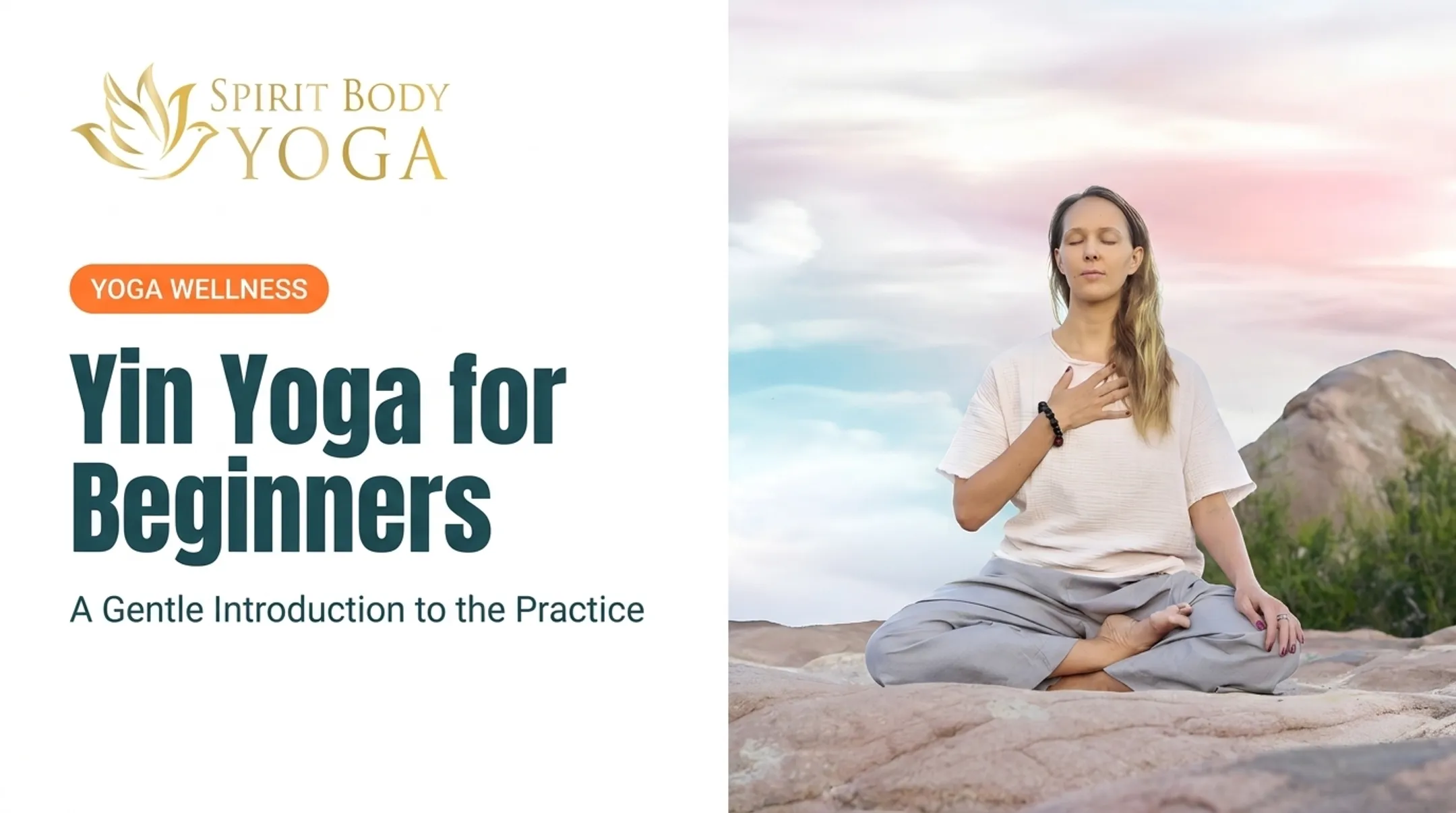

Yin Yoga offers a different approach. Instead of flowing through poses, you hold a small number of seated or reclined shapes for 3 to 5 minutes at a time, letting gravity and stillness work on your body instead of muscle effort.
This article covers what Yin Yoga actually is, what to expect in a typical class, the benefits backed by research, and how to know if it's the right practice for you.
Key Takeaways
- Long-held passive poses (3–10 minutes) target connective tissue rather than muscle
- Taoist philosophy and TCM ideas like chi and meridians shape the practice’s slower pace
- Regular Yin practice is linked to lower anxiety, better sleep, and reduced stress markers
- Beginners can start right away—poses are simple physically, but mentally demanding
- Spirit Body Yoga includes on-demand Yin classes in its online membership
What Is Yin Yoga?
Yin Yoga traces its philosophy back to Taoist yin-yang thinking and older Chinese movement traditions known as Dao Yin. Those practices combined physical postures, breathing, and mental focus.
A 2019 peer-reviewed review of Dao Yin documents this ancient Chinese exercise tradition. Modern Yin Yoga is best understood as inspired by these principles rather than a direct historical continuation.
The core idea: most yoga styles are "yang," meaning active and muscle-engaging. Yin is the counterbalance.
What makes a pose "Yin":
- Targets deep connective tissue, joints, and fascia—not the big muscle groups
- Holds passively for 3–10 minutes (sometimes longer)
- Uses minimal muscular effort so you can sink into the shape and stay
- Stays mostly seated or reclined; poses rarely rise above the knees

That long, passive stillness is also why many Yin teachers talk about energy, not only anatomy.
Yin teachers often reference chi (or qi) and meridians—the energy pathways described in Traditional Chinese Medicine. In a Yoga International interview with Yin founder Paulie Zink, the practice is linked to Taoist and shamanic roots, using these ideas to explain how stillness may support energy flow through the body.
This is traditional teaching language, not a clinically proven mechanism. Still, it remains central to how Yin is taught and understood.
How Is Yin Yoga Different From Yoga Like Vinyasa or Hatha?
If you've only tried Vinyasa or Hatha, Yin will feel unfamiliar at first.
Vinyasa links breath to movement in a continuous flow. You're rarely still for more than a few breaths.
Hatha, according to Yoga Journal, aligns and calms the body and mind in preparation for meditation. It typically moves at a more moderate pace than Vinyasa but still involves active muscle engagement.
Yin flips the format entirely:
- Stillness replaces flow
- Passive holding replaces muscular effort
- A handful of poses replace dozens
- Sensation and patience replace strength and stamina
You'll also notice familiar shapes with new names. Pigeon Pose often becomes "Sleeping Swan." The renaming isn't just branding; it signals a different intention behind the same general shape.
Yin vs. Restorative Yoga
People frequently confuse these two, but they're not interchangeable.
Yoga Journal's comparison explains that Yin asks you to find a sustainable edge and stay aware of manageable sensation, typically for 3–5 minutes.
Restorative yoga, by contrast, uses heavy prop support to eliminate effort almost entirely. Poses often stay for 10–20 minutes of pure rest.
In short: Yin invites gentle engagement. Restorative asks for total surrender.

What Happens in a Typical Yin Yoga Class?
A Yin class looks nothing like a sweaty Vinyasa flow. Expect fewer poses, more floor time, and long stretches of quiet. A sample structure from a Yoga International sequence keeps the pace slow on purpose:
- Five minutes of settling and body awareness
- A five-minute Butterfly pose
- Gentle counterposes to close There is no rushing between shapes—only time to feel each hold.
The Role of Props
Bolsters, blocks, blankets, and straps help support your body so you can settle into a shape without straining. Props in Yin are not about total comfort the way they are in Restorative yoga. The goal is a supported edge, not an escape from all sensation.
Breath and the Mind
Slow, easy breathing through the nose is a core part of Yin practice. A 2023 systematic review on breathing interventions found that controlled breathing techniques can support greater calming (parasympathetic) activity and help counterbalance the stress response. Slow breathing is a practical relaxation tool during long holds, not an instant off-switch for stress. Mentally, Yin asks you to stay with your breath and sensations instead of mentally checking out. That's often the hardest part — sitting in stillness for five minutes without reaching for your phone. A note on emotional release: Some practitioners cry or feel unexpected emotions during hip-opening poses. That response happens, and it is normal. The popular idea that trauma is literally "stored" in the hips is not confirmed by current research. A 2023 qualitative study on yoga practitioners noted emotional responses across multiple styles, not a Yin-specific effect tied to hip anatomy.

Benefits of Yin Yoga
Long, passive holds work differently than the quick stretches you might do before a run, and static stretching research helps explain why.
Flexibility and Mobility
A 2025 systematic review found that static stretching increases stretch tolerance and can reduce stiffness over time. A related meta-analysis found long-term stretching improves joint range of motion by changing how your body perceives and resists a stretch.
In plain terms, Yin's extended holds may genuinely improve flexibility, especially in the:
- Hips and pelvis
- Lower spine
- Hamstrings
Stress and Nervous System Benefits
Yin's slow pace is designed to help shift your body from "fight or flight" toward "rest and digest." The strongest Yin-specific evidence comes from a 2018 randomized controlled trial of 105 stressed adults who practiced Yin twice weekly for five weeks.
Compared with a no-practice control group, participants saw greater reductions in anxiety, sleep problems, and a stress-related biomarker called plasma adrenomedullin. A related pilot study of pharmacy students found lower anxiety and stress that held at three and six months after just six weeks of once-weekly Yin.

These findings are promising, though sample sizes are still small and more Yin-specific research is needed.
That same stillness is central to how GloriAnna Kirk, owner and instructor at Spirit Body Yoga, teaches the practice. Her classes blend mindful movement, breath, and spiritual intention so calming the body can also quiet the mind and nurture a deeper connection with God. It is a whole-person approach: strengthen the body, settle the mind, and care for the spirit.
Is Yin Yoga Good for You, and Who Should Practice It?
Yin works well for beginners, experienced yogis needing recovery, and anyone who wants more mobility or stress relief without a high-intensity class. The poses aren't complicated: you're not balancing on one leg or flowing through complex transitions. The hard part is mental. Sitting still for five minutes is tougher than it sounds.
What Yin is good for:
- Improving flexibility and joint range of motion
- Managing stress and anxiety
- Supporting recovery between more intense workouts
- Building mindfulness and body awareness
What Yin is not designed for:
- Weight loss or calorie burning
- Cardiovascular conditioning
- Building muscular strength
Think of it as a complement to your active workouts, not a replacement.
Precautions to Know
- Osteoporosis: Modify poses and avoid unsafe overstretching (yoga and bone-health precautions)
- Third trimester pregnancy: consult your OB before practicing; ACOG guidance supports modified yoga but doesn't confirm standard Yin holds are appropriate late in pregnancy
- Joint hypermobility or instability: Avoid prolonged passive stretching at end range; prioritize stability over pushing for more flexibility
When in doubt, talk to a healthcare professional before starting.
How to Start Practicing Yin Yoga
Starting a Yin practice doesn't require special equipment or years of experience. A simple weekly plan is enough to begin.
- Start with 1-2 sessions per week. Give your body and mind time to adjust to long holds in stillness before adding more.
- Increase gradually. Daily practice is safe for most people, but balance it with active movement like walking or strength training.
- Wear loose, comfortable clothing. You'll want room to stretch, plus a layer like a sweater or socks since your body temperature drops during long, still holds.
- Listen to your body. Sharp pain, numbness, or forced end-range sensation means it's time to back off or exit the pose.

Spirit Body Yoga's online membership makes consistent practice simple. For $29 a month (with a 7-day free trial), members get unlimited access to on-demand Yin classes alongside gentle flow, meditation, and breathwork, all from home on your own schedule.
Frequently Asked Questions
Can a beginner do Yin Yoga?
Yes. Yin poses are physically simple since there's no complex movement or balance involved. The real challenge is mental: staying still and present for several minutes at a time. Starting with a guided class can help.
How many times a week should I do Yin Yoga?
Most people do well with 1-3 sessions per week. Adjust based on your goals and how your body responds. More isn't always better, especially early on.
What happens if you do Yin Yoga every day?
Daily practice is safe for most people and can deepen flexibility and relaxation over time. Just balance it with active movement, since Yin alone won't build strength or cardio fitness.
Is Yin Yoga good for losing weight?
Not really. Yin burns very few calories since it's a low-movement practice. It supports wellness and stress management, which can complement weight goals, but it isn't a weight-loss tool on its own.
How is Yin Yoga different from other yoga styles?
Yin uses passive, long-held floor poses (3-10 minutes) to target connective tissue, while styles like Vinyasa or Hatha involve active, breath-synced movement and more muscular engagement.
What do you wear to Yin Yoga?
Loose, comfortable clothing that allows deep stretching works best. Bring a layer too. Your body temperature drops during long, still holds, so many practitioners get chilly partway through class.