
This isn't about flexibility or building strength. You'll settle into a handful of supported poses, sometimes for 20 minutes at a stretch, and let gravity and stillness do the work. Below, you'll find a complete guided sequence plus setup tips. If you'd rather be guided through it live, Spirit Body Yoga's online restorative and gentle classes offer that kind of supported, beginner-friendly experience.
Key Takeaways
- Hold restorative poses with props for 5–20 minutes so the body can fully settle and rest
- Run a full sequence for 45–75 minutes, from seated grounding to full supine relaxation
- Practice regularly for stress relief, better sleep, and easy pairing with breathwork or quiet reflection
What Is Restorative Yoga?
Restorative yoga is a passive, prop-supported practice centered on stillness rather than effort. Bolsters, blankets, and blocks fully hold your body weight so your muscles can release and nothing has to work. Yoga International describes the goal as resting in deep ease, not stretching.
Restorative vs. Other Yoga Styles
In a Vinyasa or flow class, you move through poses linked to breath, building heat and strength. Restorative yoga takes the opposite approach:
- Hold times: Most restorative poses last 10-20 minutes, versus a few breaths in flow
- Effort level: Zero muscular engagement; props do the holding
- Goal: Rest and nervous system settling, not stamina or flexibility gains
This style is accessible to any age or fitness level, including complete beginners who've never set foot on a mat.
The Benefits of a Restorative Sequence for Deep Relaxation
Chronic stress keeps your muscles in a state of low-grade guardedness—tension you might not even notice until it's released. The American Psychological Association notes that relaxation techniques can reduce this muscle tension and support overall well-being. Supported stillness gives your body the chance to let that guardedness go.
Physical benefits include:
- Release of chronic muscular tension held from daily stress
- Passive improvements in flexibility over time
- Support for recovery from fatigue or minor injury
Mental and emotional benefits include:
- Quieter, less reactive thinking
- Greater sense of relaxation and well-being with regular practice
- Better conditions for winding down before sleep
A small 2023 study of medical students found participants felt more relaxed after six weekly sessions—useful context, even at a modest scale.
For those who want it, this stillness also creates space for something deeper. Spirit Body Yoga's faith-filled approach frames practice as a chance to nourish spirit alongside body. Many practitioners use these quiet holds for prayer or reflection rather than counting breaths.
Props You'll Need to Set Up Your Space
You don't need a studio's worth of gear. Here's what helps:
- Bolster (or a stack of firm pillows/cushions)
- 2-4 blocks (or sturdy books, small boxes)
- A strap or belt (a bathrobe tie or necktie works)
- 1-2 blankets for warmth and cushioning
- Eye pillow (optional—a folded washcloth works too)
Household substitutes work perfectly well when you're starting out. The point of every prop is to eliminate strain completely. If any part of your body is working to hold a shape, add more support until it isn't.

A Complete Restorative Yoga Sequence for Deep Relaxation
This sequence runs roughly 45-60 minutes. Dim the lights, silence your phone, and set aside uninterrupted time—evening works well if you're winding down for sleep.
Gather these props before you begin:
- 1 bolster (or a few firm pillows)
- 2 yoga blocks or folded blankets for knee support
- 1–2 extra blankets for warmth and cushioning
- A wall clear of clutter
Pose 1: Seated Centering (5 minutes)
Sit comfortably, cross-legged or on a cushion if your hips are tight. Close your eyes. Let your breath slow and deepen naturally. This quiet pause settles the nervous system before you move into the sequence.
Pose 2: Supported Reclined Butterfly (8-10 minutes)
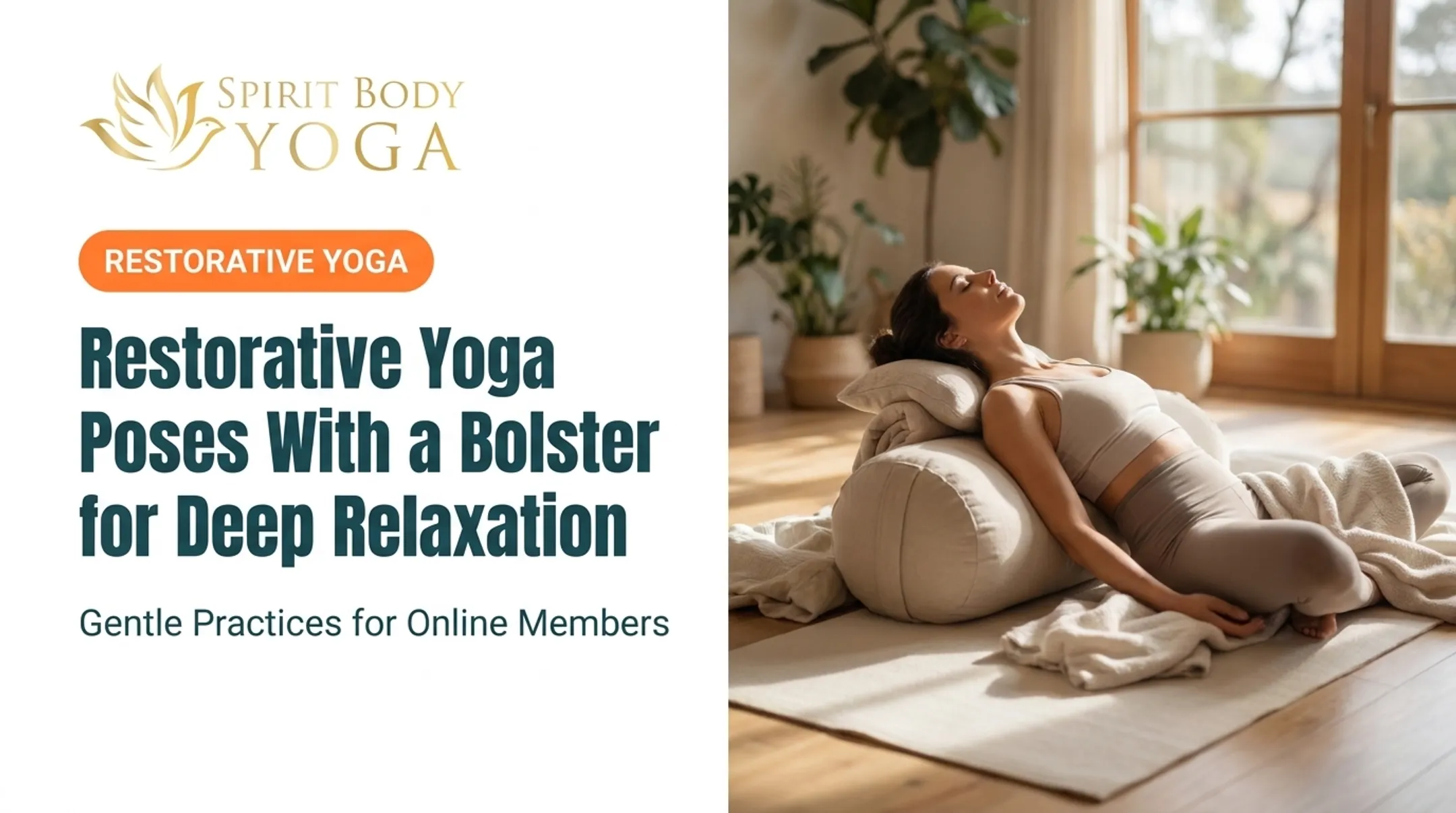
Place a bolster lengthwise behind you, lie back onto it, and bring the soles of your feet together with knees falling open. Slide blocks or folded blankets under each knee for support. This opens the hips and chest passively without any strain.

Pose 3: Supported Twist (5-8 minutes each side)
Hug a bolster to your chest, knees stacked to one side, and gently twist your torso toward the bolster. This releases tension along the spine and lower back. Switch sides when the timer ends.
Pose 4: Legs Up the Wall / Viparita Karani (10-15 minutes)
Sit sideways against a wall, then swing your legs up as you lower your back to the floor. Rest a folded blanket under your hips if needed. This gentle, mildly inverted position is calming and easy on the body.

Pose 5: Supported Child's Pose or Constructive Rest (10 minutes)
Kneel and fold forward over a bolster placed lengthwise, arms resting alongside it. Or, if kneeling isn't comfortable, lie on your back with knees bent and feet flat—constructive rest offers the same grounding effect.
Pose 6: Supported Savasana (10 minutes)
Lie flat with a bolster under your knees and a blanket over you for warmth. Close your eyes. There's nothing left to do here but breathe and let go. Stay until you feel fully soft and still.
Tips to Get the Most Out of Your Restorative Practice
A few simple habits make long holds feel safer and more restorative:
- Practice consistently, in the morning for a gentle start or in the evening to prepare for sleep
- Anchor long holds with slow breathwork, a simple mantra, or quiet prayer if that fits your practice
- Expect mild soreness the next day sometimes; it usually means deep tissue release, not injury
- Lean on guidance if you're new—Spirit Body Yoga's 60-minute Gentle Yoga livestream offers posture cues and modifications for solid alignment
Frequently Asked Questions
How long should you hold poses in a restorative yoga sequence?
Hold each pose for 5–20 minutes so your nervous system can settle into deep relaxation. If you’re new to stillness, shorter holds are fine while you adjust.
What is the difference between restorative and yin yoga?
Both use props and long holds, but yin targets connective tissue with a mild stretch sensation. Restorative yoga avoids stretch sensation entirely, favoring full support instead.
Can beginners do restorative yoga at home?
Yes. Use household items as prop substitutes and follow a simple sequence like the one above. Spirit Body Yoga’s on-demand library also includes beginner-friendly restorative and gentle classes.
Will I feel sore after a restorative yoga class?
You may feel mild soreness the next day—that’s deep muscular release, not injury. It usually shows up 12–48 hours after practice.
What are the best times of day to practice restorative yoga?
Morning works well for a gentle, calm start to the day. Evening practice supports winding down before sleep. Choose whichever fits your goal and schedule.
Do I need special props for restorative yoga?
Not necessarily. Pillows, rolled towels, and books work well when you’re starting out; bolsters and blankets simply make longer holds more comfortable.