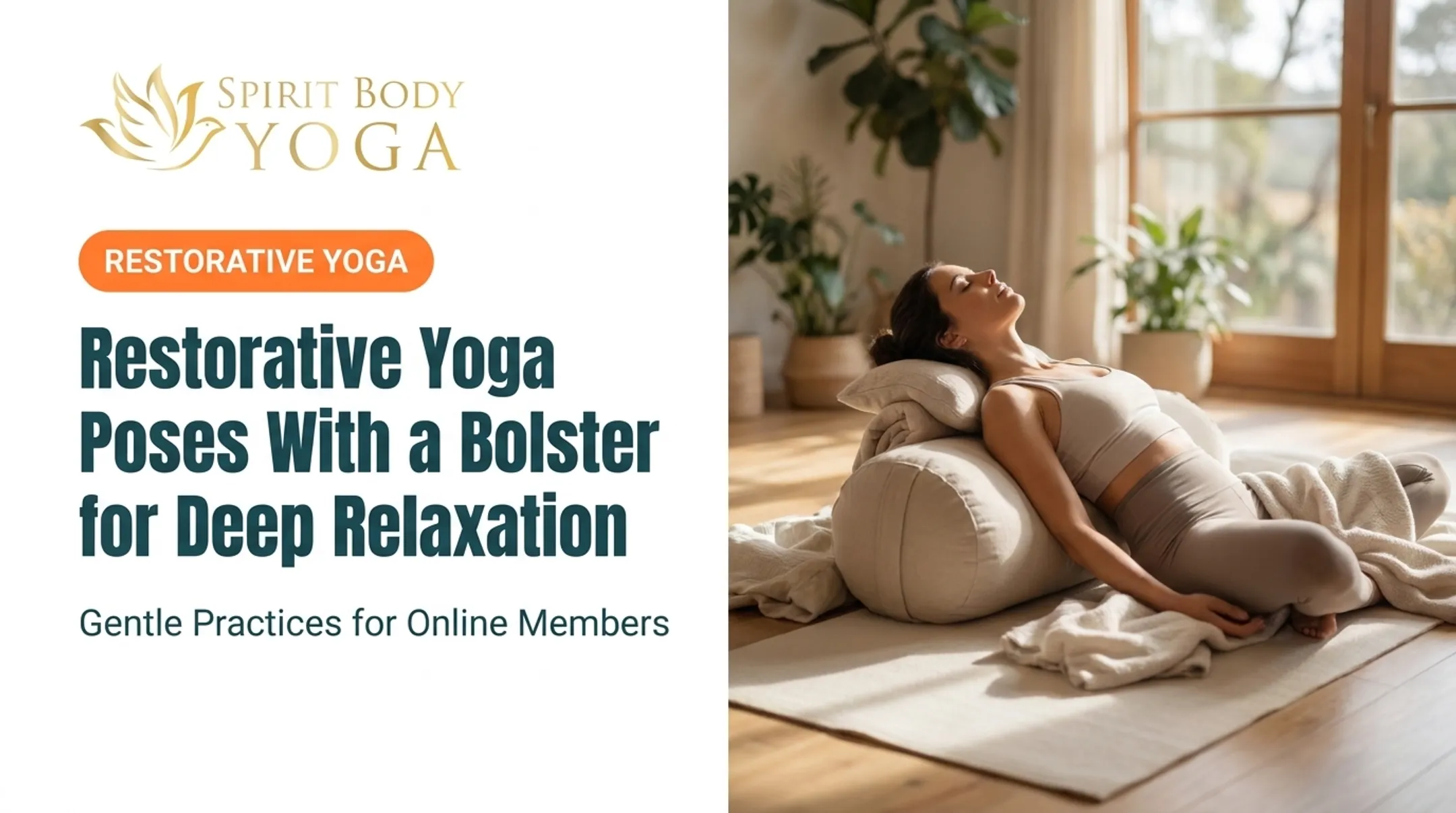

That overstimulated, can't-quite-settle feeling is exactly what restorative yoga was designed to address. Unlike sweaty vinyasa flows or strength-focused sequences, restorative yoga is a slow, prop-supported practice built entirely around deep relaxation, not fitness.
This article covers what restorative yoga actually is, how it compares to other gentle styles, its research-backed benefits, and how to start practicing, whether that's on your living room floor or through a guided online class.
Key Takeaways
- Restorative yoga uses props to fully support the body in a few poses, held for 5–20 minutes
- The goal is nervous system regulation, not stretching, strength, or calorie burn
- Evidence points to relief from occupational stress, fatigue, and low mood
- Beginners, older adults, and people recovering from illness often find it accessible
- A few household items (pillows, blankets) can substitute for yoga props
What Is Restorative Yoga?
Restorative yoga is a passive practice. You're not stretching to an edge or engaging muscles to hold a pose. Instead, props (bolsters, folded blankets, blocks, straps) do the work of supporting your body so you can fully let go.
A typical session includes just a handful of poses, each held for 5 to 20 minutes. There's no flow, no transitions to keep up with. You settle in, breathe, and stay.
The Nervous System Connection
The goal is physiological, not aesthetic. Restorative yoga is built to activate the parasympathetic nervous system, shifting the body out of fight-or-flight and into "rest and digest" mode.
Cleveland Clinic notes that regular practice may help slow heart rate and lower blood pressure. Most restorative-specific research hasn't directly measured heart rate variability or parasympathetic markers, so the benefit is plausible—not a guaranteed outcome for every practitioner.
What separates restorative yoga from fitness-driven styles:
- No muscular effort
- No pushing toward a deeper stretch
- More support when a pose feels uncomfortable—not less
At Spirit Body Yoga, founder GloriAnna Kirk brings her own layer to this practice. She pairs restorative-style movement with guided breathing, meditation, and spiritual intention, treating the body, breath, mind, and spirit as connected rather than separate. It's yoga as rest for the whole person, not just the body.
Restorative Yoga vs. Other Gentle Styles
"Gentle" and "restorative" get used interchangeably a lot, but they're not the same thing.
What Is the Difference Between Gentle and Restorative Yoga?
Gentle yoga still involves movement. You'll transition between poses, hold light stretches, and engage some muscles, just at a slower pace and lower intensity than power yoga. Holds typically last seconds to a couple of minutes.
Restorative yoga is entirely passive. There's no active stretching or movement between poses. Holds run 5 minutes or longer, sometimes up to 20.
Quick comparison:
| Element | Gentle Yoga | Restorative Yoga |
|---|---|---|
| Movement | Light, active | None; fully passive |
| Hold time | Seconds to 2 minutes | 5-20 minutes |
| Muscular effort | Some | None |
| Goal | Mobility, gentle strength | Deep relaxation |

Restorative vs. Yin Yoga
Yin and restorative both move slowly, but they work differently:
- Yin: Targets connective tissue with a mild stretch, held about 3-5 minutes (Yoga Journal)
- Restorative: Avoids stretch sensation entirely—full comfort is the only goal
If you feel any pulling or intensity in a restorative pose, add a prop. That sensation means you need more support, not that you're doing it right.
Benefits of Restorative Yoga
Stress and Nervous System Support
Restorative yoga can ease stress, though the evidence is more measured than marketing often claims. In a 2019 randomized crossover trial of 20 night-shift nurses, stress scores fell from 65.7 to 62.6 after one guided session.
After four weeks of home practice, scores dropped further to 56.1 (2019 PMC nurse trial). That is a meaningful shift for a small, specific group.
Not every study favors restorative yoga outright. A 2014 randomized trial in adults with metabolic syndrome found simple stretching produced better cortisol reductions at six months. Restorative yoga still supports relaxation; a broad "lowers cortisol" claim just is not strongly backed yet.
Physical and Emotional Benefits
Research-linked benefits include:
- Lower blood pressure and a slower heart rate in some practitioners
- Less muscle tension and general soreness
- Sharper self-awareness with less rumination
- Better sleep quality in select populations
A 2009 pilot study of 44 women with breast cancer found clear within-group drops in fatigue after 10 weekly 75-minute restorative classes, plus favorable shifts in mood and mental health (Danhauer et al.). It is a small pilot, not a definitive trial, yet it shows real potential for people navigating illness.

At Spirit Body Yoga, that same rest supports a whole-person approach—body, mind, and spirit. Restorative classes help quiet mental noise, ease physical tension, and create space for steady peace, online and on your schedule.
How to Practice Restorative Yoga
Props You'll Need
You don't need a fully stocked yoga studio at home. A basic setup includes:
- Bolster (or firm couch cushions stacked together)
- 2-3 blankets (for padding knees, neck, or covering up for warmth)
- Blocks (or sturdy books)
- Strap (a bathrobe tie or long scarf works)
Beginner-Friendly Poses
Start with these, holding each for 5-10 minutes:
- Supported child's pose — bolster under the torso, forehead resting down
- Legs up the wall — hips close to the wall, legs resting vertically
- Reclined bound angle — soles of feet together, knees supported by blocks or pillows
- Supported bridge — a block under the sacrum, no active lifting

Setting the Mood
Dim the lights. Play something quiet. Grab an eye pillow if you have one. Keep the room warm, since your body temperature drops as you relax.
Beginners should aim for 20-30 minutes, a few times a week, gradually building up as it feels sustainable.
If you're new to the poses, start with a guided class to learn alignment and pacing. Spirit Body Yoga’s on-demand and livestream restorative and gentle sessions make that easy before you practice solo.
Who Is Restorative Yoga Best For?
Restorative yoga tends to suit:
- Complete beginners who want an accessible entry point into yoga
- Older adults looking for a low-impact, joint-friendly practice
- People recovering from illness or injury, with a doctor's guidance
- Highly active people who need genuine recovery days between hard training
One important expectation to set: this isn't a cardio or strength workout. If your goal is calorie burn or muscle building, this isn't the tool for that job. It's recovery, not exertion.
If that profile sounds like you, Spirit Body Yoga makes it easy to start gently online. You’ll find dedicated Restorative Yoga on-demand classes, plus related options like Gentle Hatha and Chair Yoga, with live sessions such as Gentle Yoga LIVE STREAM when you want guided support. Membership is $29/month and includes a 7-day free trial, so you can try the pace before you commit.
Frequently Asked Questions
Is restorative yoga good for beginners?
Yes. It requires no flexibility, strength, or prior experience. The supported poses are easy to follow, and props do most of the work for you.
Is restorative yoga a good workout?
No, and it isn't meant to be. It's a recovery and stress-relief practice that complements more active exercise, not a calorie-burning session.
What is the difference between gentle and restorative yoga?
Gentle yoga includes light active movement with shorter holds, while restorative yoga is entirely passive with holds lasting 5 minutes or more.
How long should a restorative yoga session last?
Anywhere from 20 to 60 minutes, depending on your experience level and how much time you have. Beginners often start closer to 20-30 minutes.
What props do I need for restorative yoga at home?
A bolster, a couple of blankets, blocks, and a strap cover the basics. Couch cushions, pillows, and a bathrobe tie work as substitutes.
How often should I practice restorative yoga?
Two to three times a week is a reasonable starting point, with more frequent practice during especially stressful periods.