
Not every relaxing pose belongs to "restorative yoga" specifically. Restorative is a distinct style with its own rules, props, and pace. This article covers the different types of relaxing yoga, the poses worth learning first, and how to pick a practice that actually fits your life.
Key Takeaways
- Breath and stillness calm the nervous system and release physical tension
- Restorative and Yin yoga favor props and long holds for deep relaxation
- Core poses: Legs-Up-the-Wall, Reclining Bound Angle, Supported Child’s Pose, Savasana
- Beginner-, sleep-, and stress-friendly options work with pillows and blankets
What Are Relaxing Yoga Postures and Restorative Poses?
Relaxing yoga postures are gentle shapes built to release tension, not to build strength or push flexibility limits. Think slow, supported, and unhurried.
Restorative poses take this a step further. According to Yoga Journal's comparison of Yin and restorative practices, these prop-supported postures are held for extended periods, often 10 to 20 minutes, so muscles can fully let go instead of staying engaged.
You don't need years of practice for this. These poses work at home on your living room floor, in a studio, or through an online class. No advanced flexibility required — in fact, the less you're straining, the better you're doing it.
Why Relaxing Yoga Matters for Body and Mind
Stillness paired with slow breathing signals your nervous system to shift gears. Instead of staying stuck in sympathetic "fight or flight" mode, your body moves toward parasympathetic "rest and digest" mode.
The research here is promising but still developing. A 2016 review covering 59 studies and 2,358 participants found that yoga practice was associated with increased heart-rate variability and greater vagal tone, both markers of a calmer nervous system. The reviewers cautioned that many underlying studies were small (Tyagi & Cohen, 2016).
Sleep research tells a similar story. A 2023 meta-analysis of 12 trials and 782 participants found that yoga practice improved sleep quality. The strongest effects showed up in people practicing 2–3 times weekly over 6–8 weeks.

What happens without intentional relaxation practice?
- Chronic muscle tension builds up, especially in the neck, shoulders, and jaw
- Sleep quality suffers over time
- Stress hormones stay elevated longer than they should
- The nervous system gets worse at downshifting on its own
None of this requires a dramatic overhaul. Just consistent, small pockets of stillness.
Types of Relaxing Yoga Styles
"Relaxing yoga" isn't one single practice. Different styles suit different goals, from total stillness to gentle movement.
Restorative Yoga
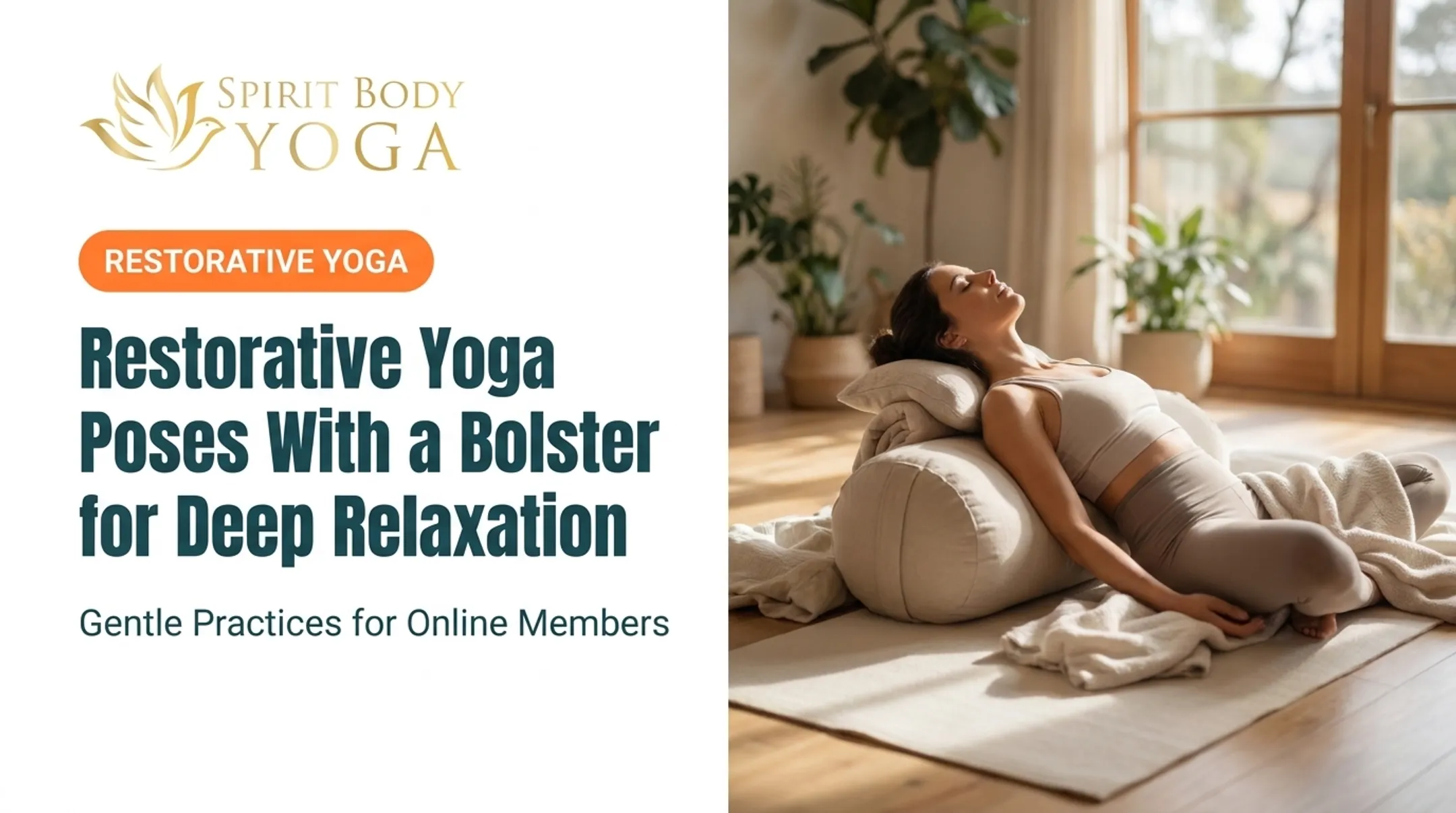
Restorative yoga uses props (bolsters, blankets, blocks) to fully support your body in passive poses. There's minimal to no active stretching. The goal is complete surrender to gravity and support.
- Best for: high stress, injury recovery, insomnia, or anyone needing a deep nervous system reset
- Strengths: activates a deep relaxation response, requires no flexibility or strength
- Limitations: needs props for full benefit; long holds can feel uncomfortable for restless beginners at first
Spirit Body Yoga includes Restorative as a dedicated class category on its online platform.
Yin Yoga
Yin targets connective tissue and joints with poses typically held 3 to 5 minutes. Unlike Restorative's total passivity, Yin involves a gentle stretch sensation with a meditative, introspective quality.
- Best for: people wanting a mild physical challenge alongside mental stillness
- Strengths: improves joint mobility and deep tissue release while calming the mind
- Limitations: longer holds can feel intense in tight areas; not ideal right after an injury
Yin is available as its own class category in Spirit Body Yoga's library, alongside Restorative, Gentle Hatha, and Vinyasa Power.
Gentle/Slow Flow Yoga
This style links breath with gentle movement instead of static holds. It's more active than restorative or Yin, incorporating light transitions between poses.
- Best for: beginners easing into yoga or those who feel restless holding still poses
- Strengths: builds body awareness and mobility while still lowering stress
- Limitations: less deeply restorative than Yin or restorative for those needing total stillness
Spirit Body Yoga offers this under labels like Gentle Hatha, Gentle Yoga, and Peaceful Flow, the latter combining breathwork, mindful movement, and a long closing savasana.

Top Relaxing and Restorative Poses to Try
These poses work on their own or as a short calming sequence. Most need only a wall, a folded blanket, or a couple of pillows.
Legs-Up-the-Wall Pose (Viparita Karani) Sit sideways against a wall, then swing your legs up as you lower your back to the floor. Rest your legs against the wall with your hips close to it (or a few inches away with a folded blanket underneath). This inversion supports circulation and calms the nervous system. Yoga Journal recommends staying for at least 10 minutes.
Reclining Bound Angle Pose (Supta Baddha Konasana) Lie back with the soles of your feet together and knees falling open, supported by blankets or bolsters under each thigh. Start with 1 minute, working up to 5-10 minutes. This shape opens the chest and hips while encouraging slower breathing.
Supported Child's Pose (Balasana) Kneel and fold forward over a bolster or stacked pillows, resting your forehead down. Hold anywhere from 30 seconds to a few minutes. It's especially good for releasing tension across the back and shoulders.
Supported Forward Fold or Wide-Legged Fold Fold forward from standing or seated, resting your torso on a stack of pillows or a chair seat rather than reaching for your toes. Hold for 1 to 5 minutes. The support eases tension along the spine and hamstrings while quieting the mind.
Supine Twist Lying on your back, drop both knees to one side while keeping shoulders grounded. Support your knees with a pillow if there's a gap. Hold for 1 to 3 minutes per side. Floor support takes pressure off the spine while releasing tension through the back and hips.
Savasana with Props Lie flat with a bolster under your knees and perhaps a folded blanket under your head. This closing pose lets the body absorb the practice. Spirit Body Yoga's Peaceful Flow livestream ends each session with a long savasana, typically 10 to 15 minutes in traditional practice.

How to Choose and Build a Relaxing Yoga Practice
Before picking poses, consider a few factors:
- Current stress level – higher stress may call for Restorative over Yin
- Physical limitations – injuries or tight joints affect which holds feel safe
- Time available – even 10 minutes counts
- Desired outcome – sleep, general stress relief, or gentle flexibility
Getting started:
- Pick 2-3 poses and hold each for 3-5 minutes
- Gradually increase duration as your body adjusts
- Use household items like pillows, folded blankets, or rolled towels if you don't own yoga props
- Close with Savasana, even if it's just for a minute or two

Guided instruction helps with alignment and breathing cues, especially early on. Spirit Body Yoga's online membership ($29/month with a 7-day free trial) includes on-demand Restorative and Gentle Yoga classes plus weekly live-stream pop-up sessions. That setup works well if you want structured, instructor-led guidance instead of figuring it out solo.
Frequently Asked Questions
What yoga style is most relaxing?
Restorative and Yin yoga are among the most relaxing styles, thanks to long holds and prop support. That said, any mindful, breath-focused practice can calm the nervous system.
Can beginners do restorative yoga?
Yes. Restorative yoga requires no flexibility or prior experience, making it one of the most beginner-friendly styles available.
How long should restorative yoga poses be held?
Poses are typically held 10 to 20 minutes in a full restorative class, though beginners often start around 3-5 minutes and build up gradually.
Can I do restorative yoga every day?
Restorative yoga is gentle enough for daily practice for most healthy people and can work well as part of a nightly wind-down routine. Check with a healthcare provider if you have specific health conditions.
What's the difference between yoga and restorative yoga?
"Yoga" is a broad umbrella covering many active and dynamic styles. Restorative yoga is one specific gentle approach focused on passive, prop-supported relaxation.
Why do I cry during restorative yoga?
Emotional release during stillness is common. As your nervous system relaxes, stored tension or suppressed emotion can surface unexpectedly. That's a normal response, not a sign anything's wrong.