
Plenty of articles explain what Vinyasa is. Fewer explain what it actually does to your energy, stress levels, and body awareness over weeks and months. That's the gap this article fills.
Here's what's ahead: a clear definition of Vinyasa, the physical and mental benefits backed by real research, what happens when practice gets inconsistent, and how to build a routine that actually sticks.
Key Takeaways
- Vinyasa links breath to movement, creating a flowing practice that builds strength and calm together
- Research shows measurable gains in strength, flexibility, and cardiovascular fitness from regular practice
- The practice adapts to any level, from first-timers to advanced yogis
- Spirit Body Yoga's online Vinyasa Power classes combine movement, breath, and spiritual intention for whole-person wellness
What Is Vinyasa Yoga
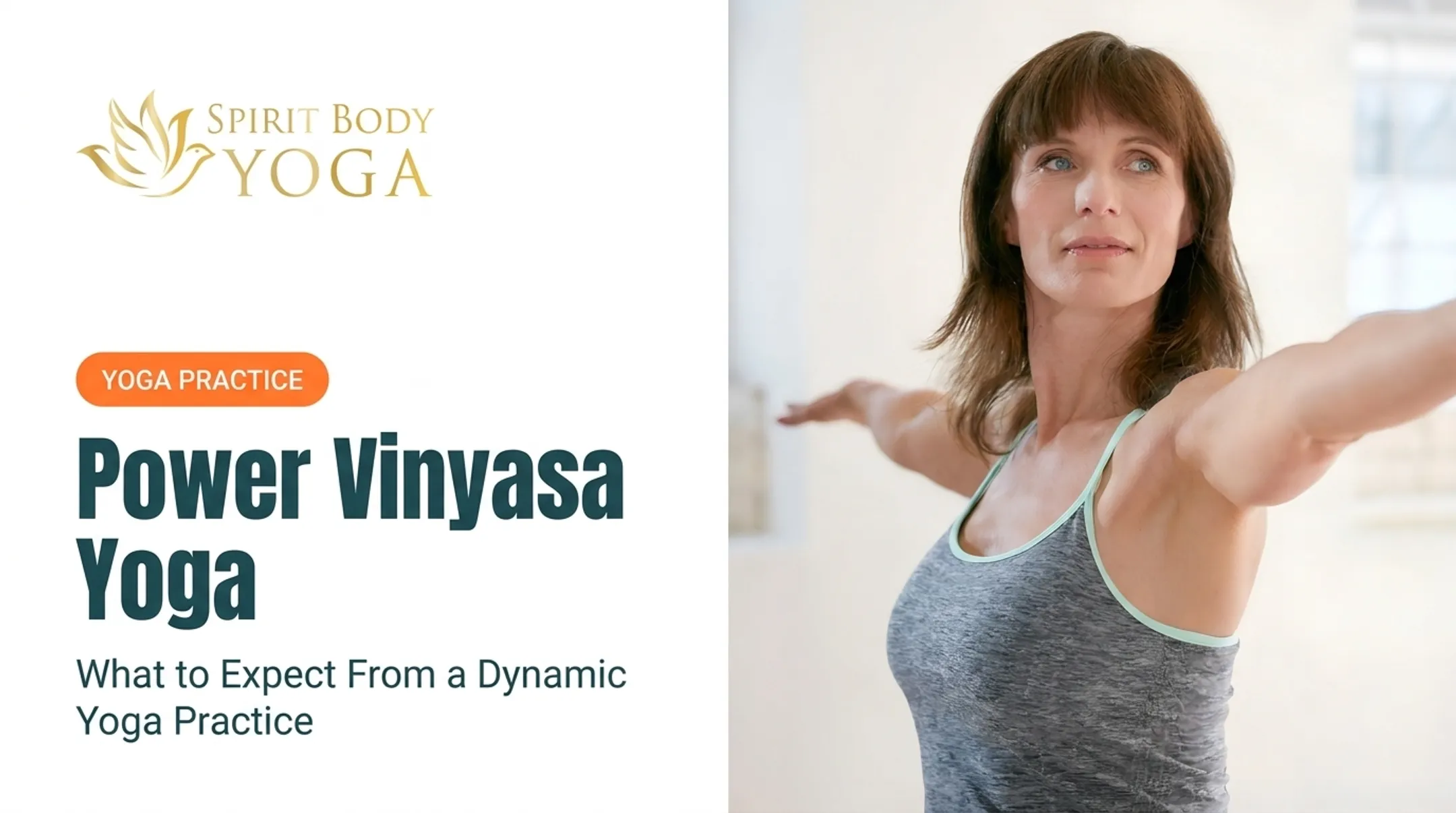
Vinyasa means "linking breath to movement." Instead of holding one pose and resetting, you flow continuously from one posture into the next, with each transition timed to an inhale or exhale.
You'll find Vinyasa in studios, on livestreams, and through on-demand libraries. It ranges from gentle, meditative sequences to fast-paced power flows that leave you sweating.
Spirit Body Yoga's class library reflects that range:
- Peaceful Flow: Opens with grounding breathwork, moves through a smooth mindful sequence, and closes with restorative savasana. Gentle yet strengthening.
- Vinyasa Power: A stronger, intentional flow built for physical strength, mental focus, and inner resilience.

The point isn't nailing a "perfect" pose. It's using breath-linked movement as a tool for building resilience, both physically and mentally.
Key Physical Advantages of Vinyasa for Vitality
These benefits focus on outcomes you can actually measure: strength, flexibility, cardiovascular response, and daily energy.
Builds Strength and Endurance
Continuous bodyweight sequences (planks, chaturanga, warrior poses) build functional strength through repeated dynamic movement, not isolated moves like a bicep curl.
A 2022 controlled study put this to the test. Sedentary adults practiced Vinyasa for one hour, three days a week, for eight weeks. The results:
| Measure | Before | After 8 Weeks |
|---|---|---|
| Handgrip strength | 26.97 kg | 31.00 kg |
| Back strength | 62.93 kg | 72.93 kg |
| Leg strength | 63.20 kg | 82.67 kg |
| Wall-sit time | 55.87 sec | 85.74 sec |
All changes were statistically significant. Push-ups and 6-minute-walk distance did not improve in the same study, according to the 2022 trial published in the Journal of Exercise Physiology. Vinyasa builds strength in specific, sequence-dependent ways rather than across every fitness marker.

Who benefits most:
- People returning to fitness after a break
- Desk workers with weak posture or core fatigue
- Athletes who need functional, transferable strength
Improves Cardiovascular Health and Energy
Vinyasa's flowing pace elevates heart rate similarly to light aerobic activity. Continuous movement paired with breath control raises circulation and builds stamina over time.
A 2023 study of different Vinyasa sequences found metabolic demand and heart-rate response varied by sequence, yet stayed in the moderate-intensity range. Intensity depends on class style and pace, so calorie burn is not fixed.
In a separate crossover trial, systolic blood pressure dropped by over 8 points five minutes after a 60-minute Vinyasa session, compared with sitting still, even though heart rate rose during practice.
Expect gains in stamina, circulation, calorie expenditure, and day-to-day energy. That mix makes Vinyasa a solid low-impact cardio option when you want a boost without pounding your joints on pavement.

Increases Flexibility and Mobility
Unlike static stretching in styles like Hatha, Vinyasa uses dynamic, continuous movement to gradually lengthen muscles and open joints while they're warm.
In the same 2022 study referenced above, participants saw:
- Sit-and-reach scores improve from 10.55 cm to 15.13 cm
- Back-scratch flexibility improve from 3.24 cm to 7.70 cm
Both changes were statistically significant. Better range of motion supports smoother daily movement, especially if you sit, drive, or hold repetitive postures for long stretches of the day.
Mental and Spiritual Benefits That Restore Vitality
The breath-movement link in Vinyasa creates what many practitioners describe as a "moving meditation": full-body focus that quiets mental noise.
Calms the Nervous System and Reduces Stress
Synchronized breathing during flow is often described as activating the parasympathetic nervous system, the body's "rest and digest" mode. Vinyasa-specific research on cortisol is still mixed. Some short trials have found no clear change in stress markers after several weeks of practice, or after a single power Vinyasa session.
That doesn't mean the calming effect isn't real for practitioners — it means the science hasn't fully caught up yet. Practitioners more consistently report a sense of regulation that builds with routine, especially for people managing high-stress jobs or burnout.
Enhances Focus, Mood, and Emotional Balance
Sequencing poses requires attention. You can't scroll your phone mid-flow. That forced presence trains focus in a way that can carry into daily life, helping with mood regulation and reducing rumination.
That same presence is central to Spirit Body Yoga's faith-rooted approach online. Peaceful Flow, for example, is built to leave room for both strength and reflection:
- Opens with grounding breathwork
- Moves through a calm, strengthening sequence
- Closes with extended savasana
GloriAnna Kirk's teaching blends mindful movement with spiritual intention, helping practitioners connect breath, body, and faith for deeper emotional grounding. One member, Jayneen, described feeling "mentally, spiritually, and physically refreshed" after class.
What Happens When Vinyasa Is Practiced Inconsistently
Sporadic practice blunts nearly every benefit above:
- Strength and flexibility gains slow down, because the 8-week studies showing measurable change relied on 3x-weekly consistency
- Stress-regulation benefits stall, since nervous system adaptation compounds with regularity rather than one-off sessions
- Injury risk rises when inconsistent practitioners lose proper form or push too hard trying to "catch up"
- Mental clarity fades, as the moving-meditation effect regular practitioners describe drops off without routine
How to Get the Most Vitality from Your Vinyasa Practice
Vinyasa delivers its best results under specific conditions:
- Practice consistently: aim for 2-3 sessions weekly rather than sporadic bursts
- Prioritize breath awareness: rushing through poses without breath coordination undercuts the nervous-system benefits
- Modify for your level: use beginner variations of chaturanga, downward dog, and other foundational poses rather than forcing full expression too soon

Consistency is easier when classes come to you. Spirit Body Yoga's online membership gives unlimited on-demand library access plus weekly live pop-up classes, so you can build a routine from home, a hotel room, or anywhere with Wi-Fi.
For beginners, Gentle Yoga and Peaceful Flow offer modifications and slower pacing before you move toward Vinyasa Power.
Conclusion
Vinyasa's real value lies in the union of breath, movement, and mind: a combination that builds both physical and mental vitality. Research is consistent on one point: these benefits compound with regular practice, not one great class.
Treat Vinyasa as an ongoing practice, not a quick fix. Whether you're building strength, calming your nervous system, or deepening a spiritual connection, the payoff comes from showing up, again and again, for the whole person: body, mind, and spirit.
Spirit Body Yoga’s online Vinyasa classes support that consistency with on-demand and live options you can practice anywhere.
Frequently Asked Questions
What does Vinyasa yoga do to your body?
It builds strength, flexibility, and cardiovascular endurance through continuous, breath-linked movement. Studies show measurable gains in grip, back, and leg strength along with improved flexibility after consistent practice.
What are the 5 pillars of Vinyasa yoga?
While there's no single official standard, breath, movement, alignment, focus (drishti), and intention are commonly cited as core teaching principles across Vinyasa lineages.
Is Vinyasa yoga good for beginners?
Yes. Beginners can start with modified poses and slower-paced classes, like Gentle Yoga or Peaceful Flow, before progressing to more active flows.
How often should I practice Vinyasa for noticeable benefits?
Most research points to 2-3 sessions weekly for gradual strength, flexibility, and stress-related improvements. Sporadic practice significantly slows results.
What's the difference between Vinyasa and Hatha yoga?
Vinyasa uses continuous, flowing movement linked to breath, while Hatha holds poses longer at a slower pace. Both use breath, but Vinyasa emphasizes transitions.
Can Vinyasa yoga help with weight management?
It can support calorie burn and fitness as part of a broader healthy routine, though research shows results come from consistency combined with other habits, not Vinyasa alone.